Camo Corner

What is taxidermy?

Taxidermy is a professional process of preserving animal specimens through detailed processing, modeling, and restoration in order to achieve the most natural and realistic representation possible.
What is animal taxidermy?

Understanding taxidermy as an art form

Taxidermy is a professional process of preserving an animal after the harvest, with the goal of faithfully presenting its natural appearance, structure, and character.

It is not simply about “creating a trophy,” but a precise craft that combines biology, anatomy, art, and experience in order to preserve the authenticity of each individual specimen.

A high-quality taxidermy mount represents a lasting memory of the hunt, as well as respect for the animal and the nature it lived in.
When and why taxidermy is done

Reasons for taxidermy and the right time to have it done

Taxidermy is most often done after a hunt, when a hunter wants to permanently preserve the memory of a special harvest, a trophy specimen, or a meaningful moment in their hunting story.

A lasting memory of the hunt

Taxidermy is done when you want to preserve an authentic memory of a special hunt and a unique experience.

Preserving trophy value

For a valuable harvest, taxidermy allows the trophy, form, and natural characteristics of the animal to be properly preserved.

Educational and presentation purposes

Taxidermy mounts are used in hunting lodges, collections, and exhibitions to present the species, its environment, and hunting tradition.

Respect for the animal

Professional taxidermy gives the animal a dignified final presentation through careful processing and long-lasting preservation of its appearance.
The difference between taxidermy mounts

The difference between basic and complex taxidermy mounts

The difference between basic and complex taxidermy mounts is not only in their size or the level of difficulty involved, but also in the method of processing, the level of detail, and the time required to achieve a natural, long-lasting, and aesthetically accurate result.

Basic taxidermy mounts

They include trophy preparations such as skulls, antlers, or simple displays. The focus is on the trophy as a record of the hunt.

Full mount

The most demanding form of taxidermy, presenting the entire animal in a natural stance. This is where knowledge, modeling, and an artistic approach come together.

Shoulder mount

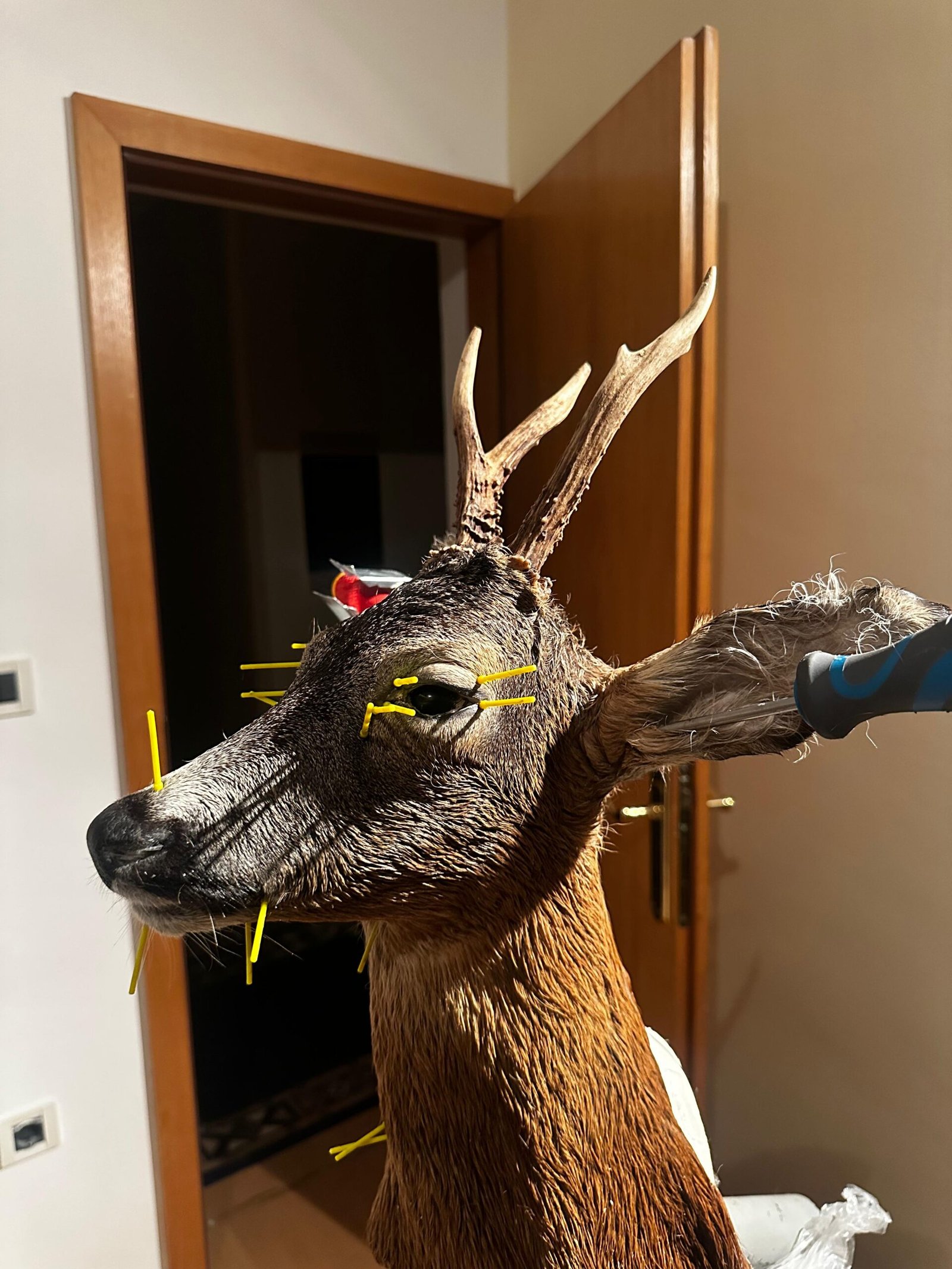
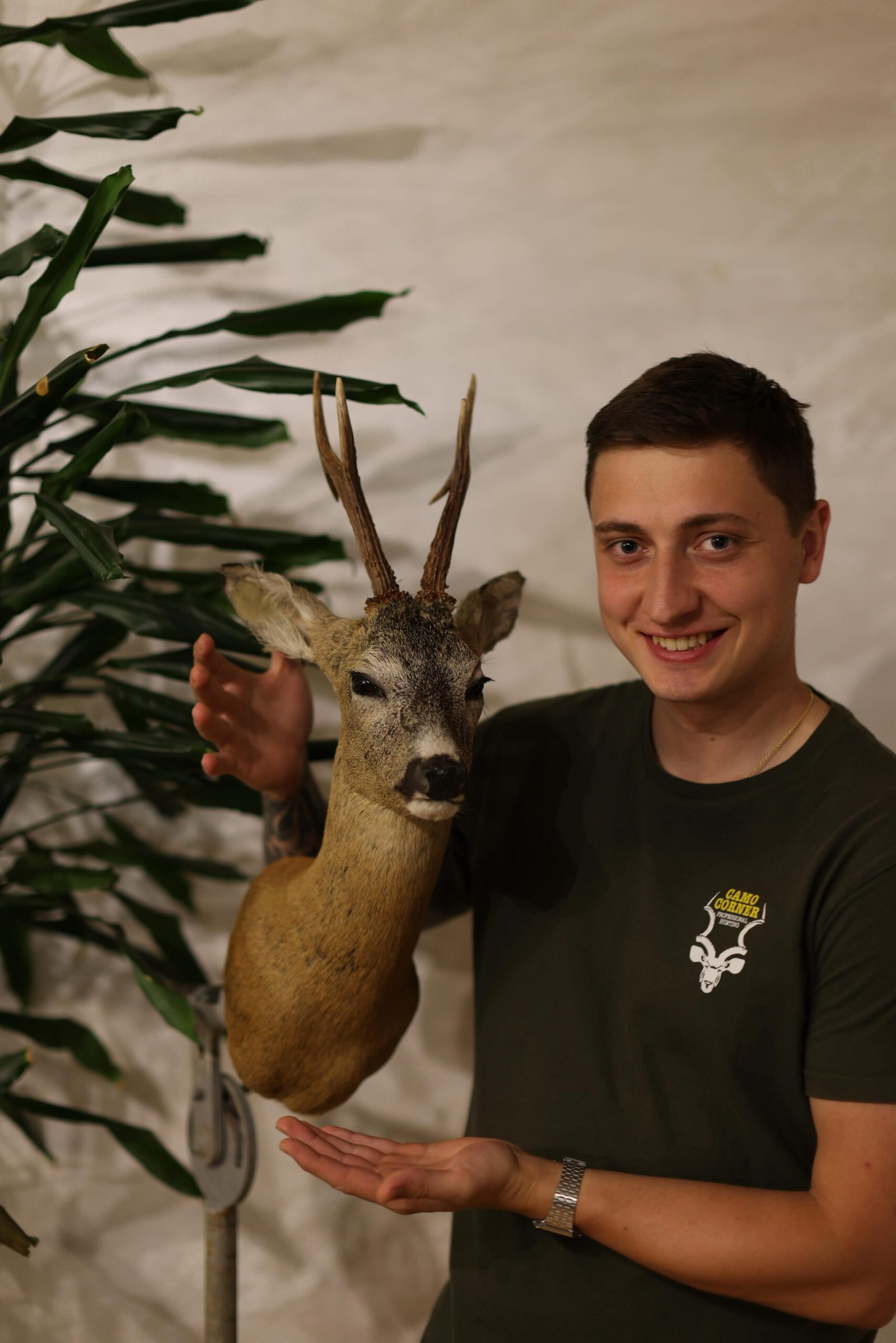
The most common form of wall-mounted taxidermy, showing the animal’s head and part of the neck in a natural pose, with an emphasis on anatomical accuracy.

Rugs and decorative pieces

They are used when the focus is on functionality or the aesthetics of a space, while preserving the animal’s characteristics.
What the client should pay attention to

Proper handling after the animal has been harvested

For high-quality taxidermy, it is important to handle the animal properly immediately after the harvest, as the way it is handled directly affects the final appearance of the trophy.

The animal should be moved as little as possible, and dragging it along the ground should be avoided to prevent damage to the skin and hair. Do not cut the parts intended for taxidermy; only perform the basic field preparation.

The specimen should be cooled as soon as possible and protected from moisture, dirt, and sunlight.

We recommend contacting us immediately after the hunt for further instructions.